
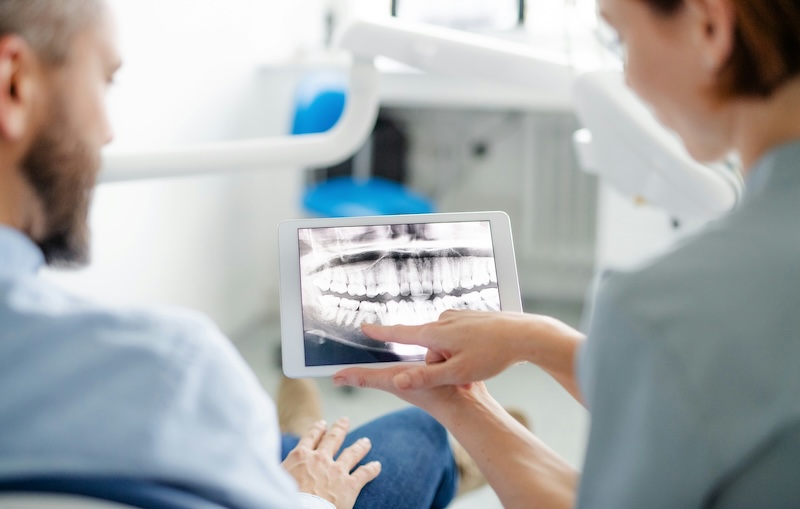
Digital dental X-rays have transformed the way dental professionals diagnose and treat oral health conditions. Compared to traditional film X-rays, digital imaging offers significant advantages for both patients and dental teams.
One of the biggest benefits of digital dental X-rays is reduced radiation exposure. Digital sensors are much more sensitive than traditional film, requiring significantly less radiation to capture clear, detailed images. This makes digital X-rays a safer option for patients of all ages, including children and those who require frequent imaging.
Another major advantage is instant image availability. Images appear on a computer screen within seconds, allowing the dentist to quickly review the results and discuss findings with the patient in real time. This efficiency reduces appointment time and improves the overall patient experience.
Digital X-rays also provide enhanced image quality. Dentists can enlarge images, adjust brightness and contrast, and zoom in on specific areas to detect issues such as cavities, bone loss, infections, and impacted teeth more accurately. Early detection often means more conservative and cost-effective treatment.
From an environmental perspective, digital X-rays are an eco-friendlier choice. They eliminate the need for film, chemical processing, and physical storage space, reducing waste and chemical disposal.
Finally, digital imaging improves communication and recordkeeping. Images can be securely stored in a patient’s electronic chart and easily shared with specialists or insurance companies when needed, streamlining referrals and claims processing.
Overall, digital dental X-rays offer a safer, faster, and more precise diagnostic tool—enhancing both the quality of care and the patient experience.